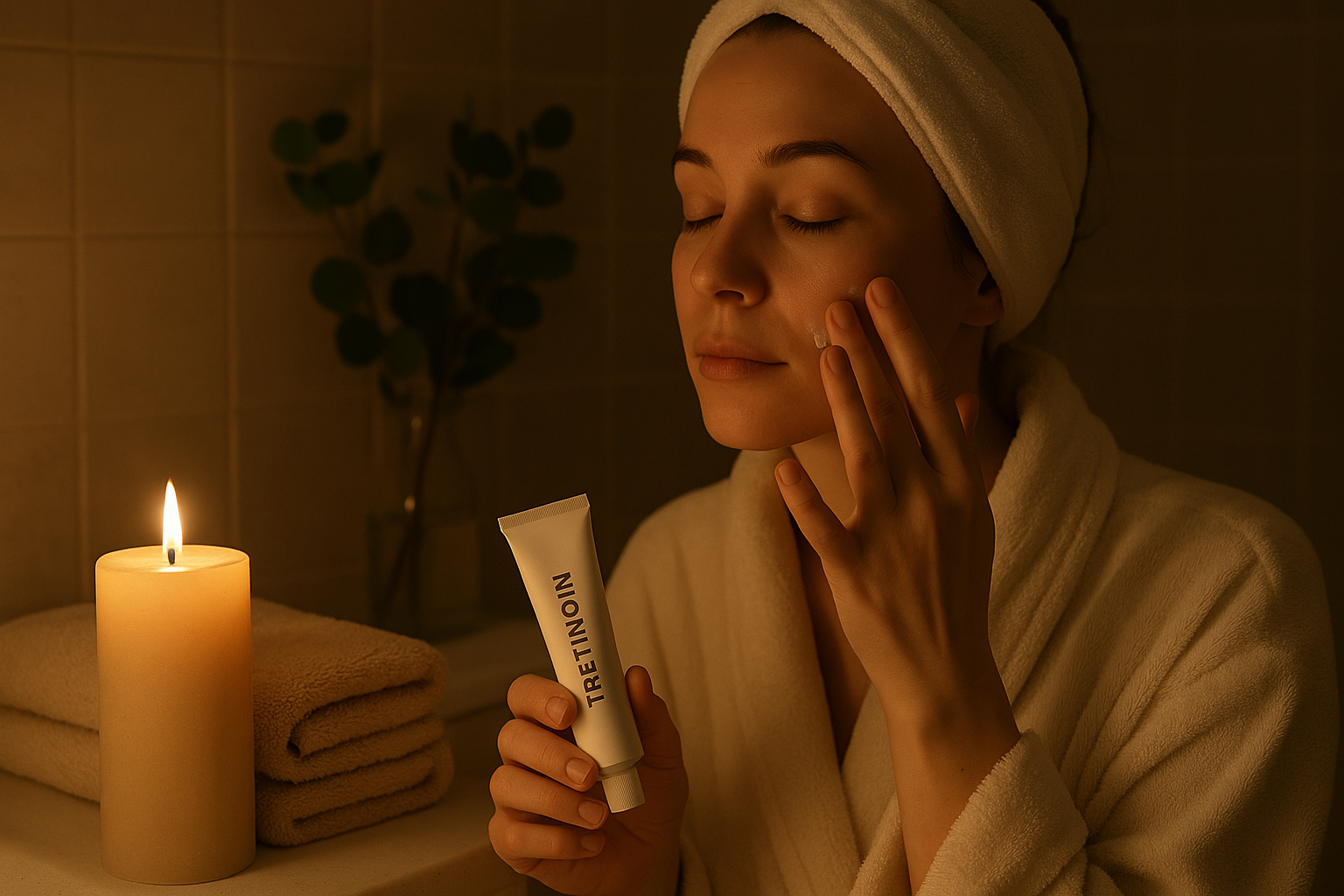
Why Tretinoin Is Best Used at Night: The Science, Myths, and Modern Best Practices
The debate over whether to apply retinoids in the morning or evening is settled by the fundamental chemistry of the molecule. Tretinoin (all-trans retinoic acid) is the gold standard for treating acne and photoaging, but its effectiveness depends entirely on its stability during application. In 2026, clinical guidelines remain firm: tretinoin is strictly a nighttime product.
The Chemistry of Photolability: Why Light is the Enemy
The primary reason tretinoin must be applied at night is its extreme photolability. This means the chemical bonds within the tretinoin molecule are unstable when exposed to ultraviolet (UV) light.
- Molecular Degradation: When sunlight hits tretinoin on the skin, the molecules undergo “isomerization,” essentially breaking down into inactive forms before they can be absorbed by the skin cells.
- Neutralized Efficacy: Applying the product in the morning often results in the active ingredients being neutralized by UV rays, meaning you are essentially applying an expensive moisturizer with no therapeutic benefit.
- Oxidative Stress: The breakdown of the molecule in sunlight can sometimes create free radicals, which may cause unnecessary skin irritation rather than the desired cellular repair.
The Danger of Increased Photosensitivity
Beyond the degradation of the product itself, tretinoin fundamentally changes how your skin interacts with the sun. By accelerating cell turnover, tretinoin thins the stratum corneum (the outermost layer of dead skin cells), which serves as a natural, albeit minor, shield against UV rays.
Failing to respect the “PM-only” rule significantly increases the risk of severe sunburn and long-term DNA damage. To understand the cellular risks of daylight application, it is essential to review the detailed clinical explanation of why tretinoin is a PM product and the biological consequences of ignoring this protocol.
Best Practices for 2026: The “Gold Standard” Night Routine
To maximize the structural changes tretinoin offers—such as increased collagen synthesis and cleared pores—a disciplined nighttime routine is mandatory.
- Double Cleanse: Remove all traces of daily SPF and pollutants to ensure a clear pathway for the retinoid.
- The Wait Period: Wait at least 20 minutes after washing your face. Applying tretinoin to damp skin increases its penetration speed too rapidly, which often leads to “retinoid dermatitis”.
- Pea-Sized Amount: Use only a small amount for the entire face. Using more does not provide faster results; it only increases the likelihood of a damaged skin barrier.
- The Morning After: Even though you applied the product at night, the increased photosensitivity remains. According to the American Academy of Dermatology (AAD), daily use of a broad-spectrum SPF 30 or higher is non-negotiable for anyone on a tretinoin regimen.
What Happens if You Apply it in the Morning?
If you mistakenly apply tretinoin during the day, you aren’t just wasting the product. You are likely to experience “sun-induced irritation,” which manifests as intense redness, peeling, and a stinging sensation that can last for several days. In the long term, this chronic inflammation can lead to post-inflammatory hyperpigmentation (PIH), effectively undoing the brightening benefits you were seeking.
Conclusion
Tretinoin is a powerful biological tool that works in harmony with your body’s natural nighttime repair cycle. By protecting the molecule from light and oxygen, you ensure that every application delivers its full potency to your skin’s receptors. Respecting the chemistry of retinoids is the only way to achieve a clear, resilient, and youthful complexion without compromising your skin’s health.